Pinasta: A Handwritten Display Font for Crafters & Sellers
If you’ve ever spent hours tweaking a label, reworking an invitation layout, or second-guessing whether your printable quote feels “just right,” you know how much a single font can shape the entire perception of your handmade product. That’s why Pinasta has become my go-to handwritten display font — not just for its charm, but for how reliably it delivers warmth, clarity, and commercial polish across real-world craft projects.
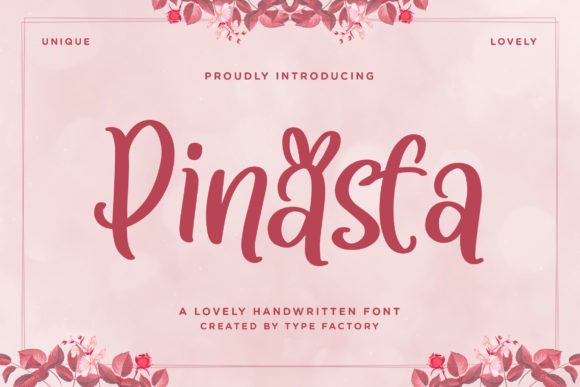
Pinasta is a graceful, natural-looking handwritten typeface — not overly ornate, not stiffly formal, but full of gentle rhythm and quiet confidence. The letterforms have soft entry and exit strokes, subtle variation in line weight, and just enough personality to feel human without sacrificing legibility. It reads beautifully at 24pt on a candle label, shines at 80pt on a farmhouse-style welcome sign, and holds up cleanly when scaled down for small sticker tags or planner headers. As a display font, Pinasta isn’t meant for long paragraphs — but it excels where attention matters most: names, titles, short quotes, product descriptors, and brand moments.
I use Pinasta daily across physical and digital product lines — from printed greeting cards sold at local boutiques to SVG-ready designs for Cricut and Silhouette users. On candle jars, I pair Pinasta with a clean sans serif (like Montserrat or Poppins) for the scent name in script and the ingredients list in crisp, functional type. For wedding stationery, I set the couple’s names in Pinasta, then switch to a refined serif (think Playfair Display) for dates and details — the contrast feels intentional, elevated, and deeply personal. Even on seasonal packaging — think holiday cookie boxes or spring botanical tea labels — Pinasta adds that handmade authenticity customers actively seek.
Readability is where Pinasta truly earns its place in my font library. Unlike some decorative scripts that blur or break when cut at small sizes, Pinasta’s open counters and generous spacing hold up beautifully on die-cut stickers, iron-on transfers, and engraved wooden tags. When prepping files for print-on-demand services or local printers, I always test at 12–14pt for tag text and 18–22pt for jar labels — and Pinasta consistently prints sharp, even on textured kraft paper or matte sticker stock. For digital downloads like printable wall art or planner pages, I’ve found it renders cleanly across devices and PDF viewers, making it ideal for Etsy listings where preview fidelity matters.
What makes Pinasta especially practical for sellers is its thoughtful design structure. It includes standard OpenType features like stylistic alternates and ligatures — subtle touches that let you swap between two versions of a lowercase ‘a’ or connect letters like ‘f’ + ‘i’ more naturally. These aren’t just flourishes; they help avoid awkward spacing in client logos or custom name tags. While it’s primarily an English-language font, the character set covers basic Latin punctuation and accented characters used in common European names — helpful if you offer personalized baby onesies or bilingual wedding signage.
Font pairing is intuitive with Pinasta. Because it’s expressive but grounded, it balances beautifully with minimalist sans serifs (for modern labels), warm serifs (for vintage-inspired packaging), or even subtle monoline scripts for layered headings. I often use it as the “voice” of a brand — the friendly, approachable front-facing element — while keeping supporting text functional and neutral. That duality strengthens brand identity without overcomplicating layouts.
Realistically, Pinasta works best for short-form, high-impact uses: product names on soap bars, boutique gift tags, chalkboard-style café menus, hand-lettered mug decals, tote bag slogans, and seasonal banner designs. It’s not built for body copy — and that’s exactly why it shines as a display font. Its strength lies in drawing the eye, inviting connection, and reinforcing the care behind your craft. Customers don’t just see “lavender honey” on a jar — they sense intention, artistry, and warmth because Pinasta carries that tone effortlessly.
One thing I always double-check before launching any new product using Pinasta is the license. Thankfully, it’s a commercial font designed for makers — meaning you’re fully covered to use it in physical products (stickers, apparel, signs), digital downloads (printables, Canva templates), SVG files for cutting machines, client work, and even merchandise like mugs or t-shirts. No hidden restrictions, no need to track usage tiers — just straightforward, ethical licensing that supports both creators and designers.
Whether you're designing a spring collection of herbal tea labels, building a cohesive suite of baby shower printables, or refreshing your shop’s packaging system, Pinasta brings consistency and soul to every piece. It doesn’t shout — it invites. It doesn’t distract — it delights. And in a market where handmade authenticity is currency, that quiet confidence makes all the difference.
For anyone who values both beauty and buildability in their design assets, Pinasta isn’t just another handwritten font. It’s a reliable collaborator — one that helps your products look thoughtfully made, professionally presented, and unmistakably yours.